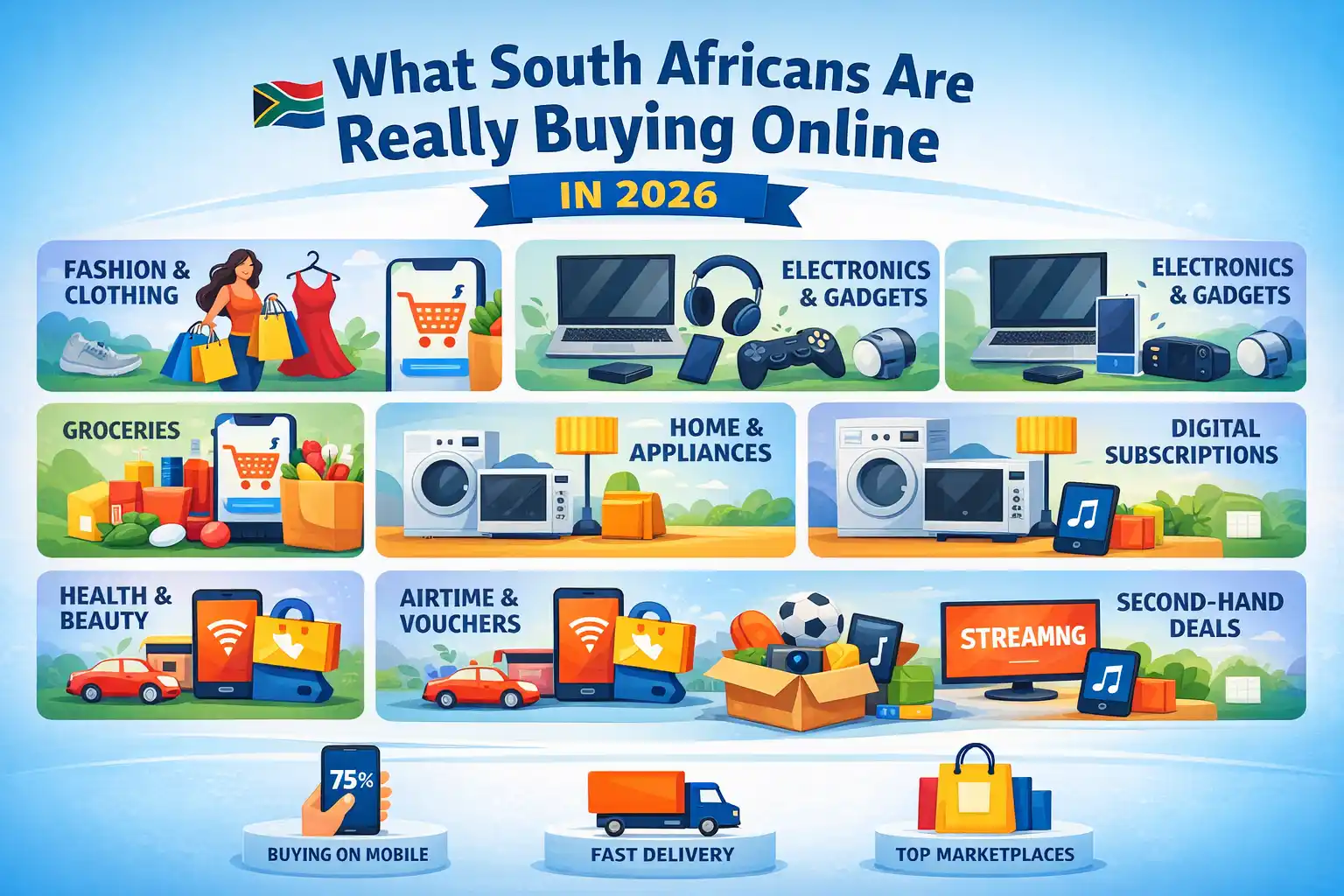
What South Africans Are Really Buying Online In 2026 (Updated: 15 February 2026 – Fresh Data & Trends)
South Africans are shopping online more than ever, with e-tail projected to rise from around R6–7 billion a few years ago to roughly R130 billion by 2025, and that shift is reshaping what people buy, how they pay, and which businesses win.
Key Takeaways
| Question | Answer (based on recent South African data and trends) |
|---|
| What do South Africans buy most online? | Recent analysis of the South African e-tail sector shows that groceries, fashion, and electronics are the top product categories bought on the internet. |
| How fast is online shopping growing in South Africa? | Online shopping is moving from a R6–7 billion niche to a projected ~R130 billion market by 2025, as detailed in the latest e-tail growth overview. |
| Which payment methods do South Africans use when buying online? | Card payments, Instant EFT, and local gateways like PayFast and SnapScan dominate, as covered in the payment gateway hub. |
| Why are instant EFT solutions like SID 2.0 growing? | SID 2.0 Instant EFT, profiled in the MyGate rollout article, gives shoppers a card-free, secure, bank-based way to pay that matches local trust patterns. |
| Are small South African startups benefiting from ecommerce? | Yes, thousands of niche brands now sell fashion, food, beauty, and digital services online, with many following patterns described in South Africa's small ecommerce startup landscape. |
| What do shoppers expect from ecommerce websites? | They expect fast, mobile-first, trustworthy stores with simple navigation, strong product pages, and smooth checkout, as outlined in the ecommerce website design guide. |
| Where can businesses get help to sell these products online? | At Webs.co.za we build complete ecommerce websites for South African businesses that want to sell into these fast-growing online categories. |
1. The Big Picture: How Much South Africans Now Spend Online
South African online retail has shifted from a side channel to a core part of everyday shopping, particularly since 2020. Recent data points to e-tail scaling from roughly R6–7 billion in early years to about R130 billion by 2025, a structural change in how the country buys.
This growth is not spread evenly across all products. It is concentrated in clear winner categories like groceries, fashion, and electronics, with repeat purchases and subscription-type buying becoming more common as trust and logistics improve.
We see three structural drivers behind what South Africans buy on the internet. First, habit: shoppers who tried online once for convenience now repeat for essentials. Second, delivery infrastructure: better last-mile services make groceries and bulky items viable. Third, global platforms like Amazon, Shein, and Temu have raised expectations for price and assortment, intensifying local competition.
For businesses, this means that moving products online is no longer optional. At Webs.co.za we build ecommerce websites that help South African brands enter this R100‑billion‑plus space with stores that align to actual buying patterns, not just theory.
2. Top Categories: What South Africans Buy Most On The Internet
Across recent research on the South African e-tail sector, three product categories dominate online spend: groceries, fashion, and electronics. These are followed by personal care, homeware, and niche digital services.
Each category has its own logic. Groceries and household essentials support frequent, basket-based buying, fashion taps into price comparison and global trends, and electronics benefit from clear specs and easy online research.
Top Online Product Categories By Consumer Focus
| Category | Why South Africans Buy It Online | Typical Purchase Pattern |
|---|
| Groceries & Essentials | Time saving, bulk deals, on-demand delivery for busy urban households. | Weekly or monthly baskets, often via apps and retailer sites. |
| Fashion & Apparel | Price comparison, wider size and style ranges than physical stores. | Seasonal splurges plus regular low-cost orders from global fast fashion. |
| Electronics & Tech | Spec comparison, reviews, and deals on higher ticket items. | Planned purchases like phones, laptops, TVs, and accessories. |
| Beauty & Personal Care | Access to niche brands, subscription-like replenishment for staples. | Monthly or quarterly reorders of known products. |
| Homeware & Furniture | Broader catalogues, price transparency, and delivery to door. | Occasional but high-value purchases. |
These categories also shape how ecommerce websites should be built. Grocery and essentials sites need fast product search and repeat ordering. Fashion sites need strong visual design, filters, and returns information. Electronics sites need detailed product pages to support high-consideration purchases.
We design ecommerce stores around these real buying patterns, so that a fashion label, tech retailer, or specialised grocery brand can meet customers with the right layout, filtering, and checkout flow for their category.
3. Groceries, Essentials, And The On‑Demand Delivery Shift
Groceries and everyday essentials are now among the fastest growing online categories in South Africa. The rise of on-demand delivery and dark stores, particularly in urban hubs, makes it easy for shoppers to move weekly and top-up spending online.
Consumers use the internet to buy pantry staples, cleaning products, snacks, pet food, and fresh produce, often in combination with promotions and loyalty programs. Convenience and time saving drive this behaviour far more than price alone.
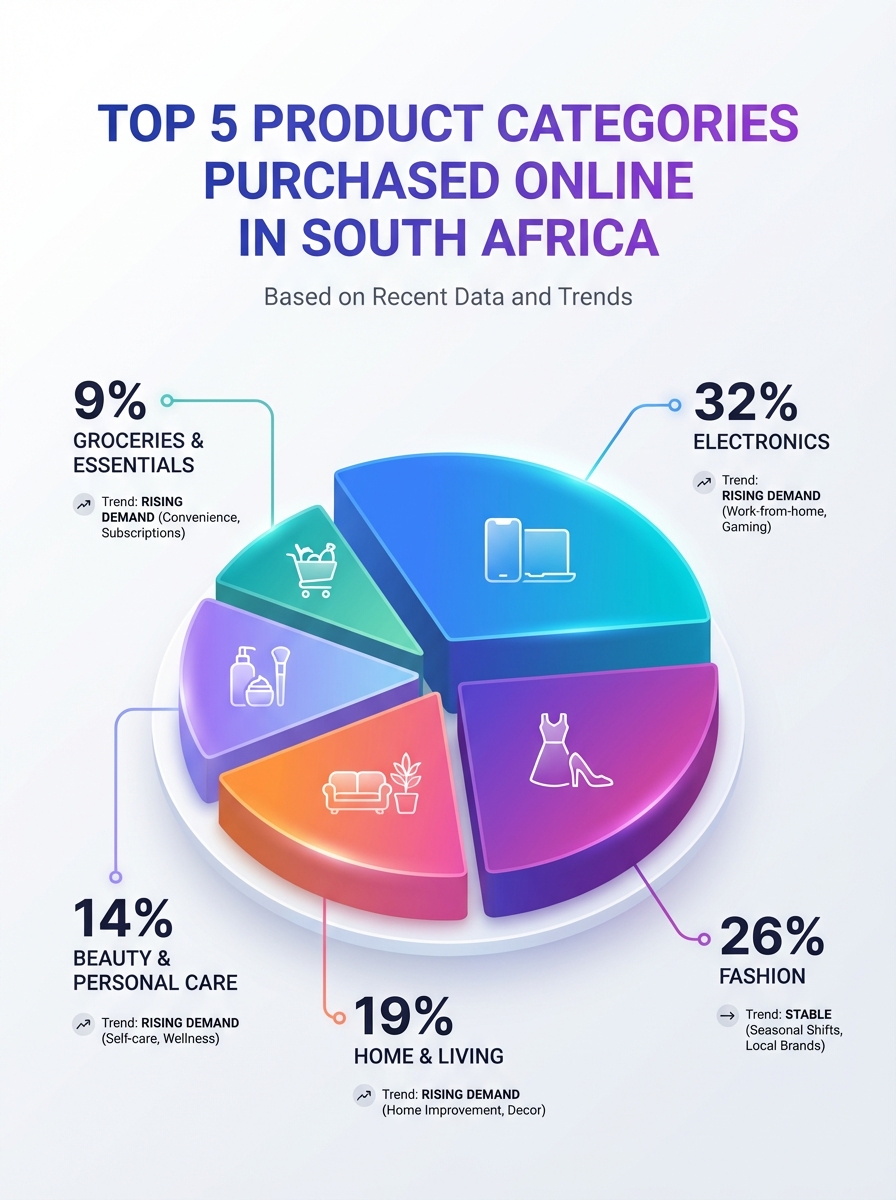
A snapshot of the top 5 product categories purchased online in South Africa. The infographic highlights evolving online shopping trends based on recent data.
In practice, this means that a significant share of South Africans now buy:
Bulk non-perishables and household goods online each month.
Same-day top-up groceries through mobile apps.
Specialty food items and health-conscious products from niche online stores.
For grocery-focused ecommerce, the website experience must support quick repeat ordering, clear stock visibility, and trusted delivery promises. Payment security is also critical because many baskets reach hundreds or thousands of rand.
We help South African retailers build ecommerce sites that can handle high-SKU catalogs and integrate with delivery partners and local payment gateways, so they can serve this growing online grocery demand reliably.
4. Fashion, Apparel, And The Global Price War
Fashion is one of the most visible online categories in South Africa. Shoppers compare local retailers with global players like Shein and Temu, and price, variety, and returns policies heavily influence where they buy.
South Africans frequently purchase clothing, footwear, accessories, and athleisure online, especially when they can see high-quality product images, sizing guides, and reviews. Fast fashion cycles, promotions, and social media trends intensify this behaviour.
Global price pressure is real. Shein and Temu aggressively promote low prices, challenging local brands to respond with better service, faster delivery, and more authentic positioning. Many South African shoppers will happily pay a bit more for a local brand if returns are simple and delivery is fast.
For fashion businesses, a strong ecommerce presence is now core to survival, not a side project. Our work on fashion ecommerce sites focuses on product photography, mobile-first design, and simple size selection to convert browsers into buyers in this highly competitive environment.
5. Electronics, Tech, And Big‑Ticket Online Purchases
Electronics and tech remain a core online category as South Africans buy smartphones, laptops, TVs, routers, and accessories on the internet. Shoppers research extensively before spending thousands of rand, then compare prices and warranties between major sites.
Product detail pages are particularly important for this category. Consumers expect comprehensive specs, comparison tables, warranty details, and transparent shipping costs before they will commit.
Electronics buyers are also more likely to use a desktop or laptop for purchase, even if they start the journey on mobile. They compare technical specifications side by side and read user reviews before making high-value decisions.
When we design ecommerce websites for tech and electronics retailers, we pay particular attention to product page layouts, comparison features, and trust markers, so that customers feel safe spending R5 000, R10 000, or more online.
6. How South Africans Pay Online: Cards, Instant EFT, And Gateways
What South Africans buy on the internet is shaped by how they prefer to pay. Local shoppers have adopted a mix of credit and debit cards, digital wallets, Instant EFT, and scan-to-pay solutions.
Recent coverage of the payments landscape shows continued growth in fintech gateways and strong consumer interest in secure, familiar options that do not always require a credit card.
Key Online Payment Methods Shaping Purchases
Card payments for general ecommerce and subscriptions.
Instant EFT for shoppers who prefer direct bank transfers.
Mobile wallets and QR payments like SnapScan and similar tools.
PayPal and cross-border gateways for international marketplaces.
Solutions like SID 2.0 Instant EFT give customers a way to pay straight from their bank account without card details, which is attractive for higher-value categories such as electronics or bulk groceries. This convenience can directly affect conversion rates.
When we build ecommerce websites, we integrate the gateways that match each audience, whether that is PayFast, SnapScan, Instant EFT, or others. The easier it is to pay, the more likely it is that a shopper will complete that grocery basket, fashion haul, or new smartphone purchase.
7. The Role Of Small South African Ecommerce Startups
While major retailers and marketplaces dominate volume, small South African ecommerce startups now account for a large share of innovation and niche product offerings. These businesses often specialise in single categories or tight product ranges.
Common startup focuses include curated fashion collections, artisanal food, health and wellness products, digital courses, and local homeware. Shoppers use the internet to discover and support these niche brands that they would never find in a mall.
These startups often leverage social commerce, influencer partnerships, and mobile-first design to reach younger, urban consumers. They also respond more quickly to sustainability and transparency demands, which are becoming important purchase drivers.
South Africans increasingly buy from brands that share their values, not only their budgets. That creates a strong opening for smaller online retailers with clear stories and reliable delivery.
We work with many of these emerging brands to build ecommerce websites that are lean, focused, and ready to grow, helping them compete effectively with bigger players while staying true to their niche.
8. Marketplaces And Multi‑Vendor Platforms: One Cart, Many Sellers
Marketplace-style shopping is another major trend in what South Africans buy online. Consumers increasingly prefer the convenience of filling a single cart from multiple vendors under one platform.
On these multi-vendor marketplaces, shoppers commonly buy a mix of electronics, gadgets, fashion, homeware, and small accessories in one go, often choosing items based on ratings, price, and shipping times.
For local entrepreneurs, marketplaces offer two angles. They can sell as a vendor on existing platforms to test product-market fit. Or they can build their own niche multi-vendor marketplace around a specific category, such as local fashion designers or home decor makers.
At Webs.co.za we provide marketplace solutions that support vendor onboarding, commission models, and category management, so South African businesses can host networks of sellers and capture more of the growing online spend.
9. What South Africans Expect From Ecommerce Websites
Regardless of category, South Africans expect ecommerce sites to be fast, simple, and trustworthy. If a store feels slow, confusing, or insecure, shoppers will not complete purchases, especially for higher-value items.
Recent design best practices highlight several non-negotiables for online stores serving the local market.
Core Features Shoppers Now Expect
Mobile optimisation so that products and checkout work flawlessly on smartphones.
Clear navigation that helps users find groceries, fashion, or electronics quickly.
Strong product pages with concise descriptions, images, and pricing.
Secure checkout with trusted local gateways and visible security cues.
For example, a grocery site must let users search quickly by category or brand and reorder past baskets. A fashion site must surface filters like size and colour and show return policies clearly. An electronics site must display specifications and compare models side by side.
We design ecommerce websites with these expectations built in, so that when South Africans arrive ready to buy groceries, clothing, or tech, the path from product discovery to payment is as straightforward as possible.
10. The Business Opportunity: Selling What South Africans Already Buy Online
The data is clear. South Africans are already buying groceries, fashion, electronics, personal care, and more online, and that behaviour is accelerating. The opportunity lies in matching the right product mix with a professional online store built around these trends.
At Webs.co.za we focus on building ecommerce websites that reflect how local consumers actually shop. That includes mobile-first design, category structures that mirror real buying habits, and integrations with the payment gateways South Africans trust.
If you sell groceries or essentials, we help you structure high-volume catalogs and repeat ordering.
If you sell fashion, we help you showcase collections, manage sizes, and communicate delivery and returns clearly.
If you sell electronics, we help you create detailed product pages that support research-heavy purchases.
Our ecommerce solutions are designed for South African conditions, from local logistics challenges to power disruptions and bandwidth realities. That lets you focus on choosing the right products while we take care of the platform that sells them.
Conclusion
What South Africans buy on the internet today is no longer limited to occasional gadgets or flights. It includes weekly groceries, seasonal fashion, big-ticket electronics, and a wide range of niche products from emerging local brands.
Recent data shows this shift is structural and still accelerating toward a multi‑billion‑rand online retail market by 2025. If you want to participate in that growth, you need an ecommerce website that speaks to how South Africans actually shop, pay, and compare products.
At www.webs.co.za we build ecommerce websites tailored to these real-world trends, so your business can sell groceries, fashion, tech, or niche products online with a store that customers trust and enjoy using.
With over 21 years of experience, I specialise in designing and developing custom e-commerce websites and mobile apps for clients seeking to establish an online presence. I assist clients in building tailored e-commerce solutions and provide training on managing the backend, empowering them to run their online businesses independently.
Read more at
Linkedin