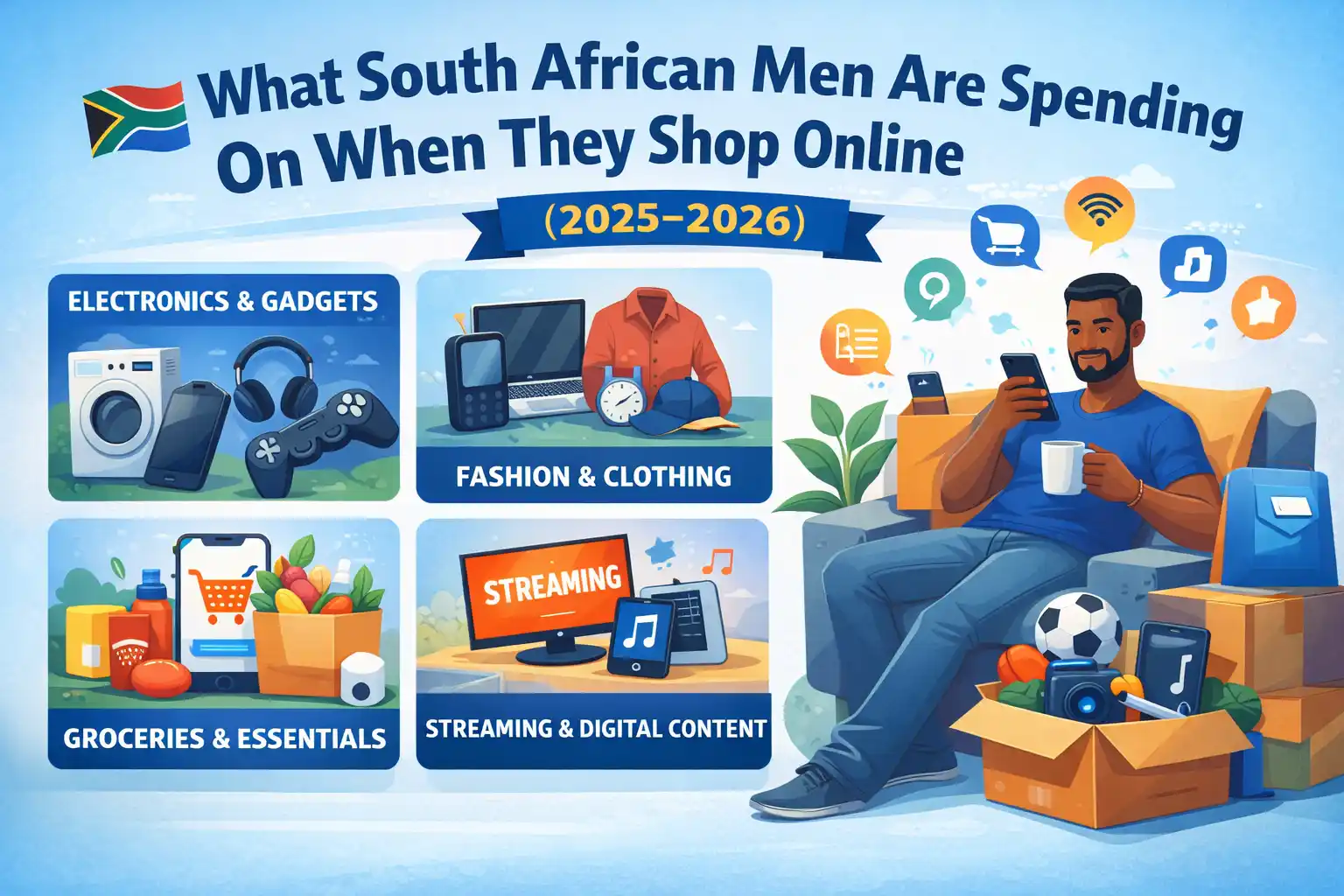
What South African Men Are Really Buying Online In 2025 – And What It Means For Your Business
Last Updated: February 2026
In 2023, men made up only 37.4% of South Africa’s online shoppers, yet their average basket values and category choices show a concentrated and powerful segment that is reshaping what sells online. In this article we unpack what South African men are spending on when they shop online, how they prefer to pay, and how we use these insights when we build ecommerce websites at webs.co.za.
Key Takeaways
| Question | Answer (Based on 2023–2025 Data & Trends) |
|---|
| 1. What are the biggest online spending areas for South African men? | Fashion, electronics, food delivery and groceries, household and DIY, and digital subscriptions are the main areas where men allocate their online budgets. |
| 2. How important is fashion in men’s online spending? | Clothing and fashion represent about 30% of South Africa’s total online revenue, and men are a key driver in sneakers, streetwear, workwear, and accessories. |
| 3. Do men buy electronics online more than in-store? | Electronics and media account for around 18% of online revenue, with male shoppers heavily represented in gadgets, components, and gaming gear. |
| 4. How much of their income are South Africans spending online? | On average, South Africans report spending about 10% of their monthly income online, which includes a significant share from male shoppers on essentials and lifestyle products. |
| 5. Which payment options matter most to male shoppers? | Secure card payments, EFT, and popular gateways like PayFast, PayPal and mobile solutions such as SnapScan and Yoco are critical. Our payment gateway guides show how to integrate them for better conversions. |
| 6. Are subscriptions and recurring payments part of men’s online spend? | Yes, from streaming to monthly product boxes, recurring models are growing. We explain how to set these up in our recurring and subscriptions payments article. |
| 7. Where can I get an ecommerce website built for this market? | At webs.co.za we build ecommerce websites tailored to South African buying behaviour, including the categories and payment methods men actually use. |
1. Overview: How South African Men Shop Online In 2025
Men are a minority by headcount in South African online retail, but they often shop less frequently and spend more per basket, especially in higher ticket categories like electronics, fashion, and home equipment. Our work with hundreds of ecommerce stores shows that male buyers are typically value focused, convenience driven, and highly responsive to clear specs, strong images, and frictionless payment flows.
Data from 2024 indicates that South Africans spend around 10% of their monthly income online, and male shoppers allocate a large portion of that to practical essentials and big-ticket hobbies. We see this reflected in the categories our clients request when they ask us to start or redesign an online shop.
2. Fashion, Sneakers, And Streetwear: The Biggest Slice Of Men’s Online Spend
Clothing and fashion account for about 30% of South Africa’s online revenue, and a noticeable share of that comes from male shoppers who favour convenience and variety over in‑store browsing. Men buy everything from basic tees to premium sneakers online, often using mobiles to compare prices across multiple stores before checking out.
What Men Are Buying In Fashion
Our portfolio tells the story clearly: menswear stores, streetwear brands, and mixed fashion boutiques are among the most requested ecommerce builds. We see strong demand for hoodies, graphic tees, workwear, athleisure, and smart-casual outfits that suit hybrid work and social lifestyles.
Many of the brands we help, such as bold streetwear and niche menswear labels, use professional visuals and mobile-friendly design to convert browsing into purchases. Price points often cluster in the mid-range, where quality is high but still accessible to monthly budget constraints.
3. Electronics, Gadgets, And Gaming: High-Ticket Male Online Purchases
Electronics and media represent roughly 18% of South Africa’s online revenue, making this one of the highest value categories for men. From phones and components to gaming peripherals and smart‑home equipment, male shoppers use online stores to compare specs, read reviews, and secure reliable delivery.
Why Men Prefer Buying Electronics Online
For electronics, men are typically detail driven and rely on accurate product data, high quality images, and trusted payment gateways. They often buy during promotions, but still prioritise warranty, brand reputation, and courier reliability over the lowest possible price.
We build electronics ecommerce layouts that highlight features such as processor type, battery life, or connectivity and that integrate secure gateways to support higher average order values. Paired with last‑mile couriers, this removes the friction that traditionally held some shoppers back from buying expensive items online.
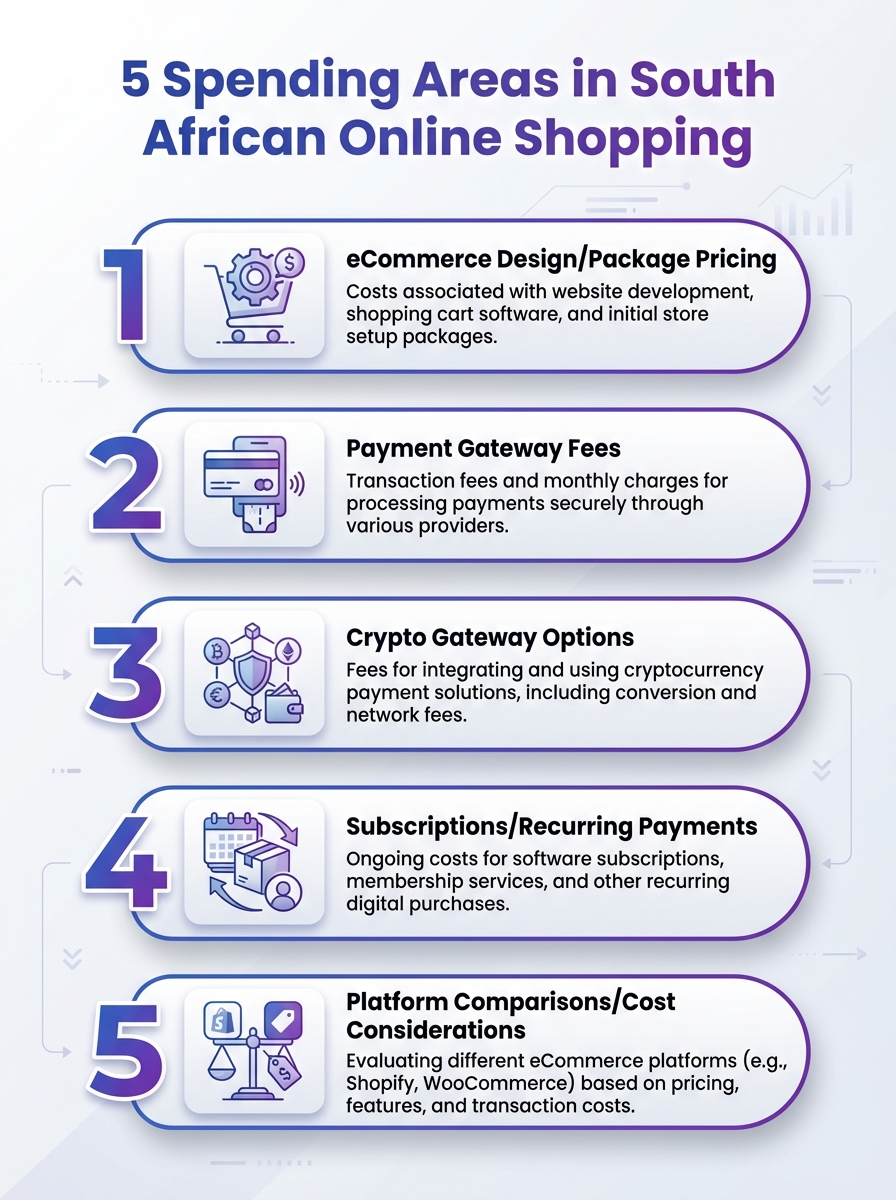
This infographic breaks down how South African men allocate their online shopping budgets across five spending areas. It highlights trends in online consumer behavior.
4. Food Delivery, Groceries, And Everyday Essentials
Across South African online shoppers, 91% buy food delivery, 84% buy groceries, and 77% buy household goods online, and men are fully part of this shift. Even if fashion and electronics stand out as visible spending categories, daily and weekly purchases for food, pantry items, and home supplies quietly account for a large share of male online expenditure.
Men often use online grocery and food platforms to avoid traffic and queues, taking advantage of direct home delivery and scheduled orders. For independent merchants, this creates strong demand for user-friendly stores that make repeat purchases fast and predictable.
How We See This In Store Types
Our portfolio includes multiple grocery, spice, and wine stores, which often report a stable base of male repeat buyers. Items like coffee, meat packs, spices, and ready-made meals are particularly popular with time‑pressed professionals and small families.
We design these stores for rapid re‑ordering, saved carts, and clear category navigation so shoppers can complete a weekly shop in minutes, not hours. Stock visibility and delivery timing information are critical for retention in these categories.
Did You Know?
SA online shoppers show strong category engagement: 91% buy food delivery online, 84% buy groceries, 83% buy clothing and apparel, 77% buy household goods, 70% buy pharmaceuticals or beauty products, and 69% buy appliances.
Source: MyBroadband – SA e-commerce trends 2024
5. Home, DIY, And Lifestyle Gear: Where Men Upgrade Their Space
Beyond daily essentials, we see male shoppers spending steadily on homeware, tools, furniture, and DIY materials to improve their living spaces. These purchases often sit in the medium price band, but cart totals climb quickly when multiple items are combined.
Men in this segment typically want clear product specifications, installation information, and realistic photos. They also respond well to bundles and free delivery thresholds, which can nudge them from browsing to purchase.
Types Of Stores Serving This Demand
Our portfolio includes furniture stores, homeware and kitchenware shops, and niche DIY brands that sell paint, tools, and repair materials. For these businesses, we design layouts that group related items and make comparison simple.
Because these products can be bulky or fragile, integration with reliable courier options and transparent shipping fees is essential. We routinely connect these stores with South African courier and last‑mile partners to match customer expectations for delivery.
6. Subscriptions, Streaming, And Digital Services
Subscriptions and digital content absorb a growing share of male online spending, including streaming video, music, cloud software, gaming subscriptions, and curated product boxes. Even when ticket sizes look small, the recurring nature of these payments makes them strategic for merchants.
Men in higher income brackets are more likely to stack multiple subscriptions, using online banking or cards to manage them. Merchants who support automated billing and easy upgrade or downgrade paths are better positioned to retain this revenue.
Implementing Subscriptions In Your Store
At a technical level, subscriptions rely on recurring billing, card tokenisation, and robust payment gateway integration. We help clients configure this model by integrating subscription plugins and local gateways that handle monthly or annual charges.
Our guide on recurring and subscriptions payments explains the common methods South African businesses use. For merchants targeting male shoppers with boxes, memberships, or ongoing services, this model creates predictable cash flow and higher lifetime value.
7. Payment Gateways Men Prefer When Spending Online
For South African men, what they spend online is closely tied to how safe they feel at checkout. Our experience across hundreds of builds confirms that trusted local gateways and familiar brands significantly increase completion rates for male shoppers.
Popular options include card processing, instant EFT, PayFast, PayPal, and mobile solutions like Yoco and SnapScan. BNPL and alternative rails are emerging, but men still show a strong bias toward methods they already use for banking or point‑of‑sale purchases.
Gateway Choices And Male Spending Confidence
In practice, we find that men are more willing to buy high‑ticket items online when stores clearly communicate security, SSL, and the gateways used. They also pay attention to whether refunds and chargeback processes are straightforward.
Our payment gateway resources cover mainstream South African providers and explain how they support recurring billing, EFT, and card vaulting. For merchants targeting male buyers, combining at least two or three familiar payment methods is usually the best approach.
Did You Know?
PayPal is the most-used online payment method among South African respondents, with about 80% usage in the cited period, while alternative rails like Ozow are used by around 34%.
Source: The Herald / Meltwater SA e-commerce insights
8. Crypto, BNPL, And New Ways Men Pay For Online Purchases
While card and EFT still dominate, a subset of male shoppers is actively experimenting with crypto payments and Buy Now Pay Later options. These users are typically more tech savvy and drawn to low fees, speed, and alternative ways to manage cash flow.
For merchants, this creates an opportunity to differentiate, but it also requires careful technical setup and risk management. We recommend testing these options in addition to, not instead of, more traditional methods.
Crypto Gateways For Niche Male Segments
Crypto gateways allow businesses to accept digital currencies, convert them to local currency, and reduce settlement delays. This can appeal to male buyers who hold crypto as part of their portfolios and want to spend it directly.
Our guide on payment gateways for cryptocurrencies outlines the security, speed, and fee advantages. Combined with clear education on store pages, this can unlock incremental sales from a small but valuable cohort.
9. What Men Expect From South African Online Stores
When we analyse what South African men are spending on online, we also need to look at how they decide where to buy. Across categories, male shoppers report that pricing, delivery options, clear navigation, and security visibly affect their willingness to complete a purchase.
Device behaviour also matters, with a large majority of shoppers using smartphones as their main channel. That means your store design, category layout, and checkout process must be optimised for mobile first, not just desktop.
Design Elements That Influence Male Spend
For male audiences, we prioritise simple menus, strong product photography, and fast load times. Men often shop quickly during work breaks or evenings, so we reduce the number of steps required to add to cart and pay.
Our ecommerce website design approach focuses on user experience, conversion, and responsive layouts across smartphones, tablets, and laptops. That directly supports higher spending from time‑sensitive male shoppers.
10. Building Ecommerce Websites For South African Men: How We Do It
Understanding what South African men are spending on online directly shapes how we design and price ecommerce solutions. We know that men gravitate toward clear value propositions, straightforward interfaces, and stores that respect their time and security concerns.
At webs.co.za we offer ecommerce websites that we design, build, and support specifically for the South African market. Our pricing is transparent, starting from R5 950 once‑off for a Startup Online Shop, with Medium, Big, and Complete Online Store options for growing businesses.
Our Ecommerce Packages And Custom Development
Merchants who target male shoppers can choose from our affordable ecommerce pricing tiers, each including professional design, payment integration, and product setup. For more specialised needs, we also build fully custom stores based on detailed market analysis.
Our custom ecommerce website development service gives you full control over features, from subscription logic and multi‑currency payments to advanced search and filtering. This is particularly useful for complex catalogues such as electronics, fashion, and automotive parts that men frequently shop online.
Conclusion
South African men may make up a smaller share of total online shoppers than women, but the categories they dominate, from fashion and electronics to food delivery and subscriptions, represent a large and growing slice of national ecommerce revenue. Their spending patterns reward stores that combine clarity, security, strong product information, and fast delivery.
If you want to capture more of this market, you need an ecommerce website that aligns with how men actually shop and pay online in South Africa. At webs.co.za we build ecommerce websites that integrate the right gateways, support the right categories, and provide the user experience that convinces male shoppers to click “pay now” with confidence. Contact us for your eCommerce store
With over 21 years of experience, I specialise in designing and developing custom e-commerce websites and mobile apps for clients seeking to establish an online presence. I assist clients in building tailored e-commerce solutions and provide training on managing the backend, empowering them to run their online businesses independently.
Read more at
Linkedin