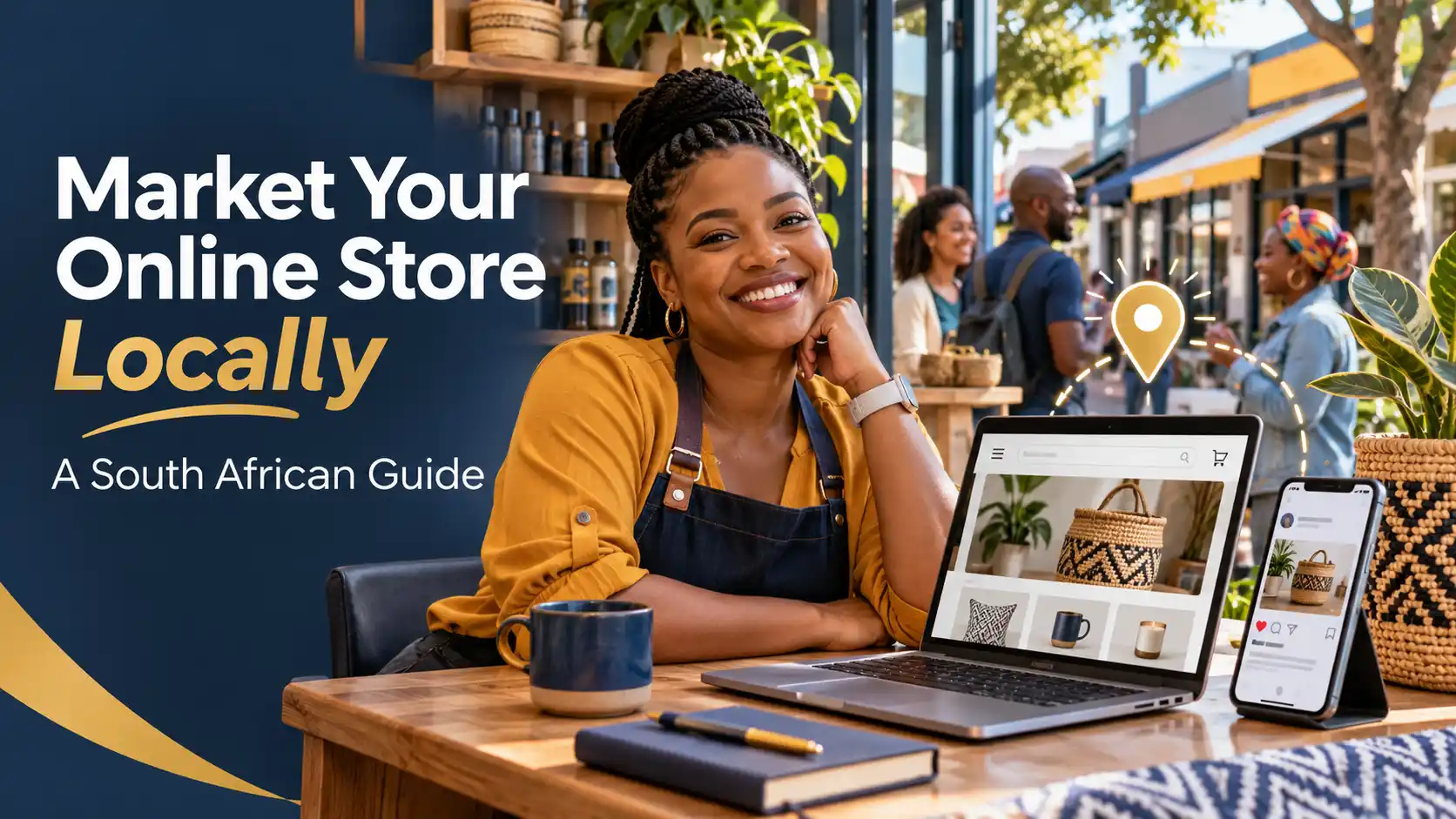
Marketing Your SA Online Store to Local Buyers
Only one in three South Africans who are online actually shop online, even though four out of five adults already have internet access [1]. That gap is not a problem, it's an opportunity sitting right on your doorstep. Winning local customers means pairing Location & Geo-Targeted Keywords, Intent & Transactional Keywords, Local Payment & Logistics Keywords, and Category & Niche Local Keywords with practical trust-building tactics. South Africans already prefer buying local over global players like Temu or Shein [2], so the real battle is getting found, trusted, and chosen by shoppers in your own city.
If you're still planning your business, see how Webs.co.za can help you start an online store in South Africa.
1. Claim and Optimise Your Google Business Profile
If your business is eligible for a Google Business Profile, set it up with accurate business information and add your main products where appropriate. Businesses that serve customers at their locations may be able to use a service-area profile. This can help nearby shoppers find you on Search and Maps when they search for a product and location. DHL's guidance for South African small businesses highlights the value of an accurate, active profile for local discovery [3].
Add opening hours, real photos, and respond to reviews. For example, a furniture store in Durban can keep its profile useful by regularly updating its photos, products and business information. Local rankings also depend on factors such as relevance, distance and prominence.
2. Weave Location & Geo-Targeted Keywords Into Every Page
Instead of generic product titles, use phrases shoppers actually type: "handmade gifts in Cape Town" or "same-day delivery Johannesburg." These Location & Geo-Targeted Keywords belong in meta titles, product descriptions, and image alt text, not just blog posts.
If your store isn't showing up in local results, it may help to make your delivery areas clearer. Add a short "Delivery Areas" section to relevant pages naming the towns you serve. Use location terms naturally and only where they accurately describe your business.
Question: What are the best eCommerce website design practices for businesses in Johannesburg and Cape Town?
Answer: Successful eCommerce design for businesses in Johannesburg and Cape Town requires structuring your site around distinct regional search intent and campaign dynamics.
Search volume and conversion behaviors differ by city: Johannesburg campaigns typically yield higher intent on search networks (Google Search/Shopping) driven by fast-paced commercial intent, whereas Cape Town campaigns often generate stronger engagement on visual social networks (Meta/Instagram) driven by lifestyle branding. To maximize conversions across both regions, your site architecture must combine fast mobile performance, local trust badges, and native ZAR payment gateways (like PayFast and Ozow) with geo-targeted landing pages built around localized search queries and city-specific delivery expectations.
3. Run Geo-Fenced Ad Campaigns With Transactional Intent
Set Google Shopping and Meta ads to target relevant locations using the options available on each platform. Depending on the campaign, you may be able to target a city, area or radius. Combine this with Intent & Transactional Keywords like "buy," "order online," or "in stock near me" to reach shoppers who are ready to purchase.
Ad copy should carry a local hook: "Delivered to your door in Sandton within 24 hours." Retail media and paid search are becoming central to local acquisition in South Africa, as advertisers shift budget toward measurable, geo-specific campaigns [4]. Budgets vary widely by city and competition, so start small, test a focused area, and expand once your results show where customers are responding.
4. Make Speed and Pickup Your Local Advantage
National retailers can't always beat a local store on delivery time. Partner with regional couriers for same-day or 24-hour delivery where practical, and advertise it using Local Payment & Logistics Keywords such as "express delivery Pretoria" or "click and collect Cape Town."
Offering free pickup from your warehouse gives customers another way to save on delivery. Delivery transparency and trust signals influence whether South African buyers complete a purchase [5], so show realistic delivery windows clearly before checkout and provide tracking information when available.
5. Offer Payment Methods South Africans Actually Trust
Debit cards and EFT remain familiar payment choices for many South African shoppers [6]. Offering recognised payment methods can help customers feel more comfortable at checkout. Avoid relying on an unfamiliar international gateway as your only option.
Use clear phrases on your checkout and FAQ pages, such as "pay by EFT" or "accepted payment methods in South Africa," so shoppers know what to expect before buying. If you are setting up or improving your store, explore our eCommerce solutions and payment setup options.
Many local sellers also list on Takealot. If you sell through a marketplace, keep your product information, stock availability and delivery details accurate so customers can make an informed choice.
6. Use WhatsApp and Micro-Influencers for Community Trust
WhatsApp has become a useful channel for retail engagement in South Africa, handling enquiries, order updates, and support in one familiar app [7]. Some shoppers are cautious about paying directly inside chat apps, so use WhatsApp for conversation and reassurance, then direct customers to your secure checkout [8].
Pair this with city-based micro-influencers for unboxings using Category & Niche Local Keywords relevant to your products, such as "organic skincare Durban" or "baby gear Pretoria." WhatsApp Business can also be a practical way for small stores to answer questions and stay in touch with customers [7].
Conclusion
Local success in South African eCommerce comes from combining small, specific advantages: accurate business information, honest delivery promises, familiar payment options, and real community engagement through WhatsApp. If your business is eligible, start with your Google Business Profile and consider testing a geo-targeted ad campaign. Add more tactics as your time and budget allow.
Have questions about setting up or managing your store? Browse our online store frequently asked questions.
References
- Four in Five SA Adults Online, One in Three Shops Online.
mastercard.com. - South African Online Shoppers Prefer Local to Temu and Shein.
connectingafrica.com. - Google This: Put Your SA Business Where Customers Can See It.
dhl.com. - IAB Connected Commerce Retail Media Playbook, October 2026.
iabsa.net. - Online Retail in South Africa 2026.
mastercard.com. - Online Retail in South Africa 2025.
mastercard.com. - WhatsApp Is a Growing Customer Relations Enabler.
businessday.co.za. - WhatsApp Clicks Into Retail, but Shoppers Still Wary of Paying in App.
sundaytimes.timeslive.co.za.
With over 21 years of experience, I specialise in designing and developing custom e-commerce websites and mobile apps for clients seeking to establish an online presence. I assist clients in building tailored e-commerce solutions and provide training on managing the backend, empowering them to run their online businesses independently.
Read more at
Linkedin