Five Micro-Niche Store Ideas to Explore
Last updated: October 25, 2026
Quick Answer to Micro-Niche Online Stores
A micro-niche online store sells a tightly curated range (5-20 products) to one specific audience instead of trying to be a mini-Takealot. In South Africa right now, the strongest micro-niche ideas solve one clear problem fast: urban streetwear without sizing stress (Fashion), scalp care for protecting edges and roots (Beauty), backup Wi-Fi power during stage 4 load-shedding (Power), pantry organization that keeps snacks fresh (Home), and smartphone microphones that sound studio-quality (Tech). These niches work because they match what South Africans already buy on mobile, through local payment gateways, with trusted courier delivery.
Key Takeaways
- Micro-niche stores focus on one audience and 5-30 products, not thousands of SKUs
- South Africa's online retail market is forecast to hit around R159 billion in 2026, growing roughly 22.5% year-on-year
- Only about 34.2% of connected adults actually shop online, a big gap micro-niches can close with trust-building and relevance
- Clothing is the top online category at 36% of SA adults, with 56% of shopping happening on mobile
- Local platforms are preferred over international ones: 43.6% choose SA platforms as their main channel versus 10.6% for international
- Starting costs for a basic store with local payments and courier integration can realistically sit under R6,000
- Validate before building: test demand with a simple landing page or TikTok video before stocking inventory
- PayFast, Yoco, SnapScan, and Ozow are the payment methods South African shoppers expect
- Part-time micro-niche stores are common since inventory stays small and manageable
What Micro-Niches Are Most Profitable in South Africa Right Now
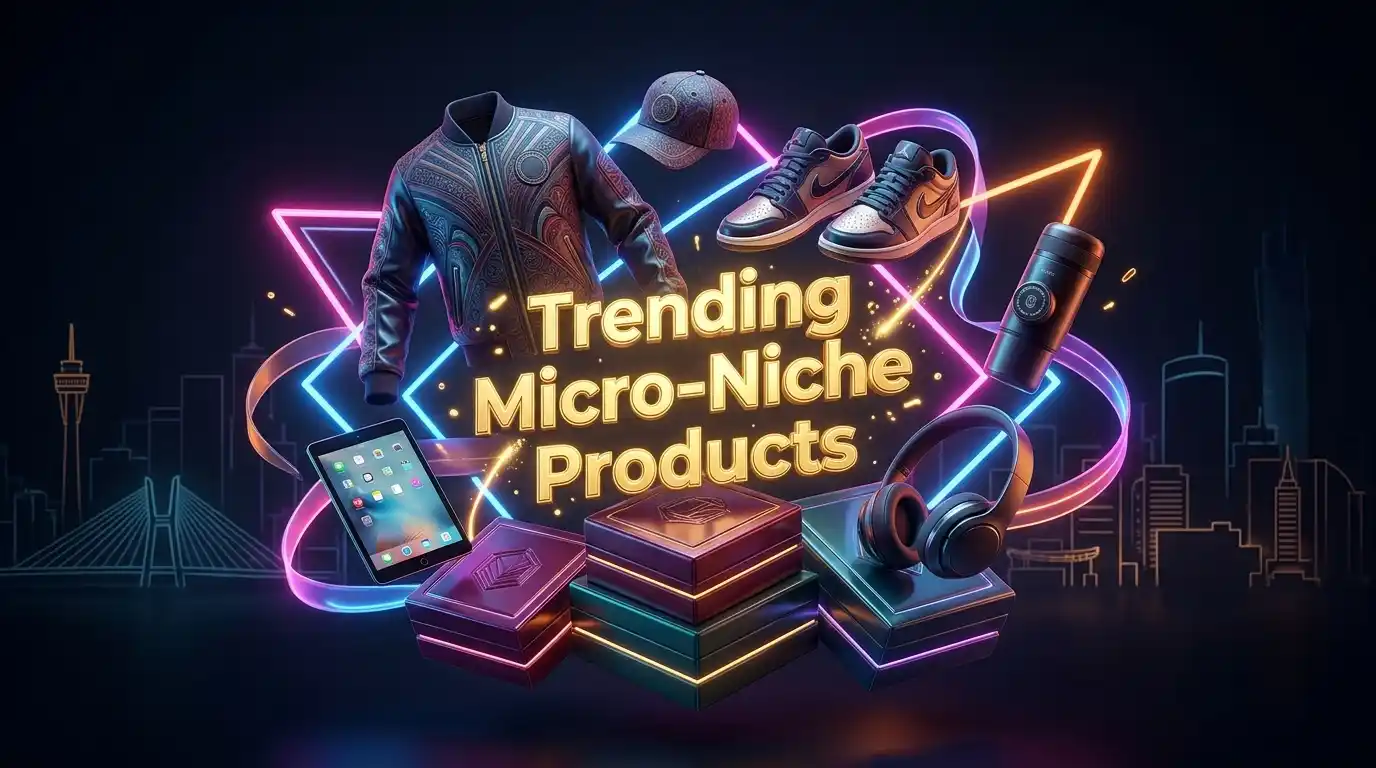
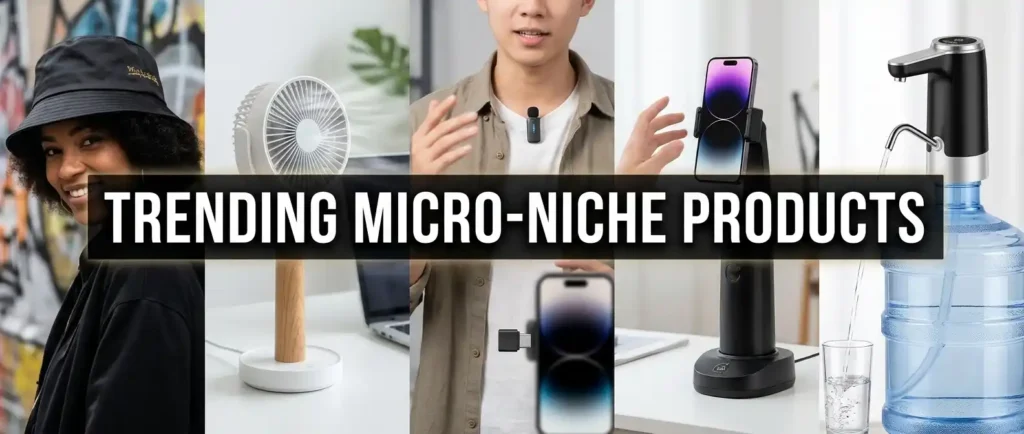
Five high-demand micro-niches stand out heading into 2026, complete with unique product examples to inspire potential clients:
Concept 1: Local Urban Streetwear & Modular Accessories
- The Angle: Fashion that looks great on camera without complex sizing headaches.
- Hero Product: Reflective Tactical Crossbody Chest Bags (high visual impact for 15-second fit-check reels).
- Supporting Catalog Items: Oversized puff-print hoodies, satin-lined streetwear bucket hats, utility belts.
Concept 2: Targeted Afro-Hair Care & Problem-Solver Beauty
- The Angle: High-satisfaction products built for instant before-and-after transformations.
- Hero Product: Steam Hair Brushes & Scalp Massaging Applicators.
- Supporting Catalog Items: Chebe & Batana oil edge control balms, shaped hydrocolloid blemish patches, glass-skin hydration sticks.
Concept 3: Compact Off-Grid Power & Load-Shedding Gadgets
- The Angle: Daily utility tools that solve unique, everyday South African challenges.
- Hero Product: 5V Mini UPS Power Backup Kits for Wi-Fi Routers (instant "stay connected" utility).
- Supporting Catalog Items: Magnetic rechargeable LED cabinet strips, foldable solar power banks, USB rechargeable desk fans.
Concept 4: Aesthetic Home & Kitchen Organizers
- The Angle: Satisfying, space-optimizing gadgets with strong ASMR restock video appeal.
- Hero Product: Handheld Thermal Bag Sealers with built-in cutter (reseals snack bags in 3 seconds on camera).
- Supporting Catalog Items: Automatic USB water bottle dispensers, silicone air fryer liners, stackable clear acrylic fridge drawers.
Concept 5: Mobile Content Creator & Remote Work Gear
- The Angle: Professional-grade tools for aspiring influencers, remote workers, and content creators.
- Hero Product: Wireless Clip-On Lapel Microphones (plug-and-play audio upgrades).
- Supporting Catalog Items: 360° AI auto-tracking smartphone holders, MagSafe LED ring lights, ultra-portable foldable Bluetooth keyboards.
What Every High-Converting Micro-Niche Store Needs
- Mobile-first design: built for shoppers arriving from TikTok and Instagram
- Local payment gateways: PayFast, SnapScan, Ozow
- Live courier rates: via Bob Go or similar for checkout trust
- Low-friction checkout: minimal form fields, guest checkout enabled
What Exactly Is a Micro-Niche and How Is It Different From a Regular Online Store
A micro-niche store sells a narrow, highly specific product range to one clearly defined customer group, instead of competing across dozens of categories like a department store. A regular online store tries to be everything to everyone; a micro-niche store tries to be the best option for one type of buyer.
For example, instead of "online fashion store," think "reflective streetwear accessories for TikTok fit-check videos." Instead of "beauty store," think "scalp and edge care for hair." This focus means:
- Lower advertising costs because targeting is precise
- Easier content creation (you know exactly who you're filming for)
- Simpler stock management since you're not juggling 500 SKUs
Choose a micro-niche if you have a specific audience in mind and can name their biggest daily frustration in one sentence.
How Much Does It Actually Cost to Start a Micro-Niche Store in South Africa
A lean micro-niche store can launch for under R6,000 if you keep the product range small below 20. Costs typically break down into store setup, initial stock, and marketing.
| Cost item | Typical range |
|---|
| Website/store build 20 -30 products | R5,000 – R6,000 (once-off) |
| Domain + hosting | R800 – R1,500/year |
| Initial stock (10-20 items) | R2,000 – R10,000 |
| Payment gateway setup | Often free, transaction fees apply |
| Starter marketing (TikTok/IG ads) | R500 – R2,000/month |
Common mistake: overspending on inventory before testing demand. Start with 10 products, not 50.
WooCommerce, and local website builders with PayFast or Yoco integration are the most practical choices for South African micro-niche sellers. Social commerce through TikTok Shop and Instagram Shopping also works well for impulse-buy niches like streetwear or beauty.
- WooCommerce: Cheaper long-term, more flexible, needs more technical setup
With Webs.co.za, you don't have to figure it out alone. We’ll guide you through your new store step-by-step in plain, everyday language—showing you how to add products, update prices, and process orders with confidence. While you focus on your customers and products, we handle all the technical heavy lifting behind the scenes. Start your online store
How Do I Validate a Micro-Niche Idea Before Spending Money
Test demand with a simple landing page, a few social posts, and pre-orders before buying stock. If people don't click, comment, or ask "where can I buy this," the niche likely needs rethinking.
Steps to validate:
- Post a short video showcasing the product idea (e.g., a scalp massager demo)
- Set up a basic landing page with a "notify me" or pre-order button
- Run a small R200 – R500 ad budget to gauge click-through interest
- Check if strangers (not just friends) engage or ask questions
Edge case: if engagement is high but nobody clicks "buy," the problem may be price or trust, not the product itself.
Common Mistakes People Make When Starting Micro-Niche Stores
The biggest mistake is choosing a niche that's too broad or too personal (loved by the founder, ignored by the market). Other frequent errors include overstocking, ignoring mobile design, and skipping local payment options.
- Picking "general fashion" instead of a tight angle like reflective streetwear
- Buying 100 units before testing with 10
- Using a desktop-first website when 56% of shopping happens on mobile
- Forgetting live courier rate calculators, which reduces checkout trust
Should I Start a Micro-Niche Store or Use Dropshipping?
You can do both. A micro-niche describes who you sell to and what you sell, while dropshipping describes how orders are fulfilled: your supplier sends products directly to your customers.
- Hold your own stock if you want more control over packaging, product checks and dispatch times, and can afford the upfront inventory.
- Use dropshipping if you want to reduce the need to buy and store stock upfront, while relying on suppliers for availability and delivery.
- Combine both by stocking selected products and using suppliers to fulfil others.
Either approach can serve a focused niche. Profitability depends on demand, margins, supplier reliability, delivery costs and customer service.
How Long Before a Micro-Niche Store Makes Real Money
There is no fixed timeline for a micro-niche store to achieve regular sales. Results depend on product demand, pricing, customer trust and how effectively your marketing reaches potential buyers. Launching before a shopping event such as Black Friday may create opportunities, but increased competition and discounting can put pressure on profit margins
Quick example: A Wi-Fi backup power store launched in August, ahead of load-shedding season, often sees faster traction than one launched in a low-outage month.
What Payment Methods Do South African Customers Expect
South African shoppers expect Payment gateways like PayFast, SnapScan, Ozow, or card payments at checkout, and stores lacking these options lose sales to mistrust. EFT-based instant payment methods like Ozow are especially popular because they avoid card entry friction on mobile.
- PayFast: broad acceptance, card + EFT
- SnapScan: strong for younger, mobile-first buyers
- Ozow: instant EFT, no app download needed
Common mistake: only offering card payment, which excludes a large share of mobile-first shoppers.
How Do I Handle Shipping for My Micro-Niche Products
Use an integrated courier aggregator like Bob Go to show live, accurate shipping rates at checkout instead of flat estimated fees. Accurate rates build trust and reduce cart abandonment, especially for first-time buyers unsure about delivery costs.
- Integrate live rate calculators so customers see real costs upfront
- Offer at least one budget courier option and one faster option
- Communicate delivery timeframes clearly on the product page
Can I Run a Micro-Niche Store Part-Time Alongside My Job
Yes, a micro-niche store with 10-20 products is manageable part-time because stock, content, and customer service stay small in scope. Many South African sellers run their stores evenings and weekends, especially when using dropshipping or pre-order models to avoid holding large inventory.
Decision rule: if you can batch content filming on weekends and answer orders within 24 hours, part-time is realistic.
What SEO Tactics Actually Work for Micro-Niche Stores
Long-tail, problem-focused keywords outperform broad category terms for micro-niche stores because they match specific buyer intent. For example, "scalp care for edges" converts better than "hair products."
- Write product titles around the problem, not just the item name
- Use local terms South Africans search (e.g., "load-shedding Wi-Fi backup")
- Keep page speed fast, mobile shoppers abandon slow pages quickly
- Collect reviews early; they boost both trust and search visibility
How Do I Compete With International Sellers in My Micro-Niche
Compete on speed, local trust, and curation rather than price alone, since South African shoppers already favor local platforms over international ones. Survey data shows 43.6% of respondents named South African platforms as their primary shopping channel, compared to just 10.6% for international sites.
- Highlight fast local delivery and Rand pricing with no customs surprises
- Build a recognizable niche brand (not a generic dropship-looking store)
- Lean into community trust through local payment options and local courier names
Do I Need Business Registration or Is It Just a Side Hustle
A micro-niche store can legally start as a sole proprietor side hustle, but registering as a Pty Ltd becomes worthwhile once revenue is consistent and you want business banking or supplier accounts. Registration isn't mandatory to begin selling, but it helps with payment gateway approvals and tax clarity as the store grows.
Choose sole proprietor if you're testing an idea. Choose Pty Ltd or cc if you've validated demand and plan to scale.
FAQ
What is a micro-niche online store?
A store focused on 5-30 curated products for one specific audience, instead of competing across many categories.
How much stock should I start with?
Start with 10-30 products to keep inventory manageable and test demand before scaling.
Do I need a business license to start?
No, a sole proprietor side hustle is legal to begin with; registration helps later as revenue grows. Steps to start your online business.
What payment methods should I offer?
PayFast, SnapScan, Ozow, and card payments cover most South African shopper preferences.
How long until a micro-niche store is profitable?
There is no fixed timeline. Content and advertising can help attract customers from launch, but sales do not guarantee profit. Profitability depends on product demand, margins, marketing costs and how many visitors become paying customers.
Which platform is best for beginners?
Woocommerce or a hosted builder offers the fastest, least technical setup for first-time sellers.
Can I compete with Amazon or Shein in my niche?
Yes, by leaning on local trust, faster delivery, and curated branding rather than competing on price alone.
Conclusion
Launching a micro-niche store doesn't require a huge budget or a warehouse full of stock. Pick one problem; sizing stress, scalp care, load-shedding Wi-Fi drops, pantry chaos, or weak smartphone audio, and build a tight catalog of 10 to 30 products around it. Test the idea with social content before spending on inventory, set up local payment and courier options from day one, and keep the store mobile-first since most South African shoppers browse and buy from their phones.
Ready to launch your micro-niche online store? Get a fully customized store with up to 30 products pre-loaded, local payment gateway setup (PayFast/Ozow/Card), automated Bob Go courier integration, and mobile-optimized design built to convert TikTok and Instagram traffic.
[Claim Your Starter Store Package Today, R5,950]
We'll check out your details and see if this starter plan will give your new online shop the ultimate boost!
References
- The R159 Billion Opportunity for South African Retailers. businesstech.co.za.
- 2026 09 02 Online Retail Sales Expected to Leap to R159bn This Year. timeslive.co.za.
- A Whopping R159bn to Be Spent in 2026 as Online Retail Crosses 10 Threshold. news24.com.
- Four in Five SA Adults Online One in Three Shops Online. mastercard.com.
- South African Online Retail Report. itweb.co.za.
- South African Online Shoppers Prefer Local to Temu Shein. connectingafrica.com.
Tags: micro-niche ecommerce, online store South Africa, dropshipping South Africa, TikTok shop ideas, PayFast integration, Bob Go courier, streetwear accessories, scalp care products, trending products South Africa.
With over 21 years of experience, I specialise in designing and developing custom e-commerce websites and mobile apps for clients seeking to establish an online presence. I assist clients in building tailored e-commerce solutions and provide training on managing the backend, empowering them to run their online businesses independently.
Read more at
Linkedin